

IBR fittings for oil and gas
The enthalpy of the high-pressure feedwater entering the boiler system.
The enthalpy of the superheated steam leaving the boiler.
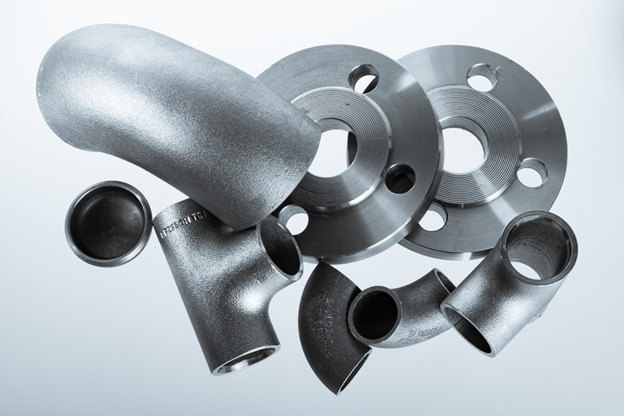
ACE ALLOYS LLP
In the Oil and Gas sector, IBR fittings serve a more complex role than in power generation. While power plants use steam to drive turbines, refineries and petrochemical plants use steam as a critical process utility—often in environments filled with volatile, flammable, or corrosive hydrocarbons.
In this industry, an IBR fitting is not just a pressure-bearing component; it is a primary containment barrier. If an IBR fitting fails in a refinery, it can trigger a domino effect, leading to a process shutdown, a steam leak, or—in the worst-case scenario—the release of flammable hydrocarbons.Here is exactly where you will find them installed:
Critical Steam Circuits
Main Steam (MS) Lines
Many hydrocarbons (like heavy fuel oil or paraffin) become viscous or wax-like at ambient temperatures. To prevent blockages, refineries wrap these product pipes with smaller "tracing" pipes filled with steam.
The IBR Requirement: The IBR Requirement: Even though these tracing lines are small, they are tied to high-pressure steam headers. IBR-certified couplings, tees, and unions are used here to ensure that thermal expansion/contraction does not cause these intricate lines to develop leaks.
2. Stripping and Purging In distillation columns and storage tanks, live steam is injected directly into the process to strip volatile components from crude oil or to purge lines of hazardous gases during maintenance.
The IBR Requirement: Because these fittings are often in direct contact with chemical vapors, they require higher corrosion resistance than standard power-plant fittings. Here, you will frequently see SS 316 or 316L IBR-certified forged fittings rather than just carbon steel.
3. Steam Reforming and Cracking Refineries use high-pressure steam in massive furnaces to "crack" large hydrocarbon molecules into smaller, more valuable products (like ethylene or gasoline).
The IBR Requirement: This involves extreme temperatures and cyclic stress. IBR-certified flanges and elbows here must be meticulously documented. In these zones, the IBR stamp acts as a "passport" that confirms the steel's heat number, chemistry, and fatigue resistance—critical data for plant inspectors who need to verify component integrity during every shutdown.
| Carbon Steel Grades | ASTM A234 WPB, WPL6 (Fittings), ASTM A105, A350 LF2 (Flanges) |
| Alloy Steel Grades | ASTM A234 WP11, WP22, WP91 (Fittings) ASTM A182 F11, F22, F91 (Flanges) |
| Size Range | 1/2" NB to 24" NB (Seamless). |
| Class/ Pressure | 150#, 300#, 400 #, 600#, 900#, 1500# & 2500# |
| Wall Thickness | SCH.10, 20, 30, 40, 80, 120, 160, STD, XS, XXS. |
| Type | Slip on Flanges – SORF, Weld neck Flanges – WNRF, Socket weld Flanges – SWRF, Blind Flanges – BLRF Lapped joint Flanges, Screwed Flanges, Long weld neck Flanges, Reducing Flanges, Spectacle Flanges, Ring joint Flanges |